Water Foundation · 9 / 9
Undam's approach to water management
A place pointed to by eight stories
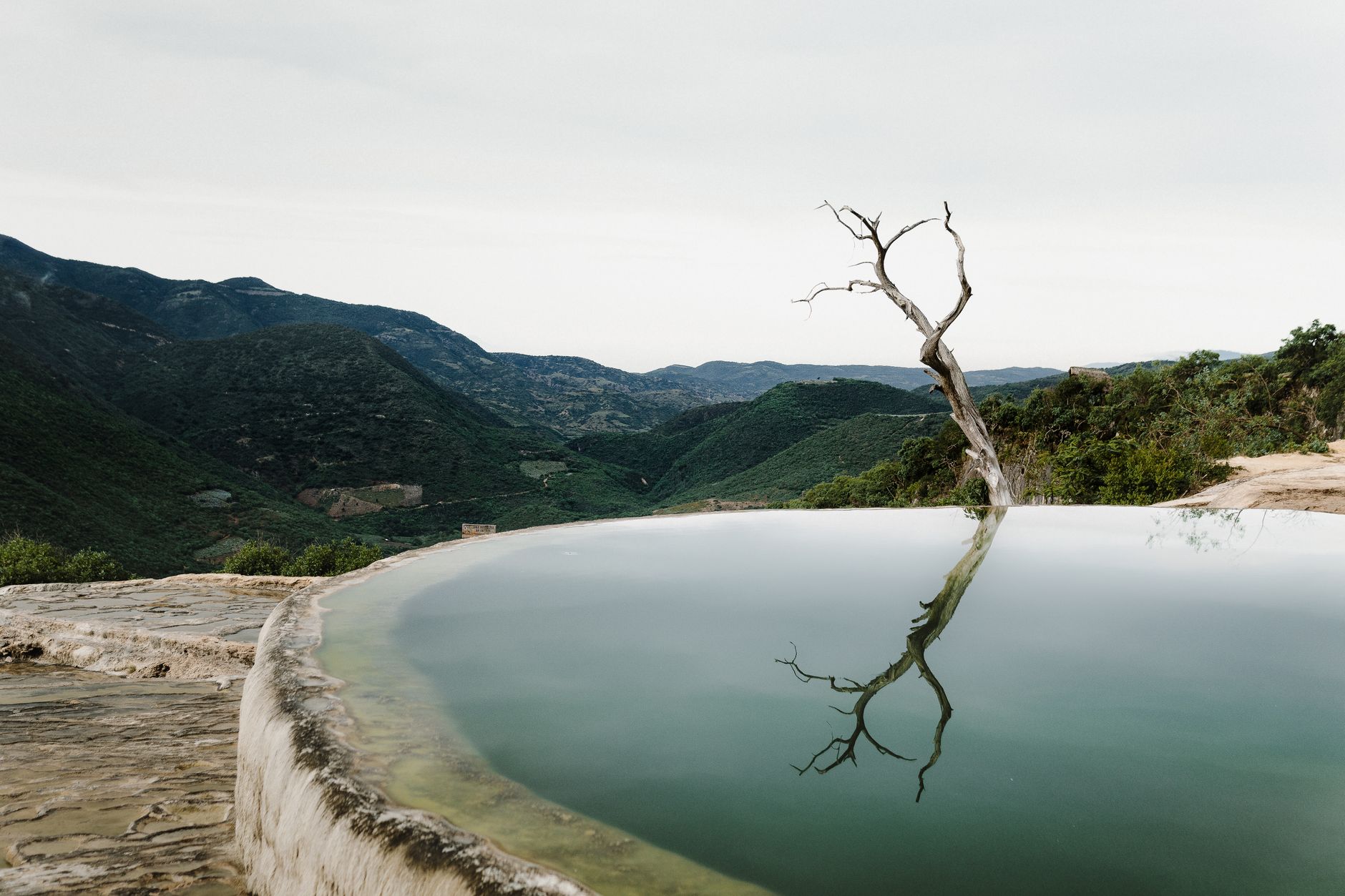
Over eight episodes, we've been discussing water, covering topics such as temperature, management, properties, depth, minerals, and seasons. These stories have all been leading up to one question: what is good water, and how can we identify it? In this final episode, we'll summarize the answer and explain how Undam Park plans to put this answer into practice.
01Summarizing our story so far
The satisfaction of playing in water comes not from fancy facilities, but from the water itself. We've concluded that good water can be broken down into three key aspects.
Temperature, water that's not too cold or too hot, but adjusted to the temperature of the day, allowing children to play for a long time. Management, water that's frequently changed has less waste and relies less on disinfectants. Properties, the feel of the water changes depending on its source and what it contains, which can be verified with numbers.
And there was a principle that ran through these three aspects: a place with good water tells its story with numbers, not words. We advised trusting places that show their composition and test results, rather than those that make claims about being good for the body.
02How Undam handles water
Undam Park plans to put these principles into practice.
Temperature, the water that comes out of this land has a gentle warmth without needing to be heated. This allows us to adjust the temperature to the season, making it cool in the summer and warm in the spring and fall. This is why we can have water play even in April and October, when others are closed.
Management, thanks to the abundant water that comes out every day, we plan to fill the water play pool with new water every morning. Instead of reusing the same water all summer, we've chosen to change it every day.
Properties, we've had the composition of this water analyzed by the Korea Institute of Geoscience and Mineral Resources and the Gyeonggi-do Institute of Health and Environment. The results show a pH of 8.92, with an alkaline nature, and a rich amount of silica and minerals compared to regular natural water. We will make these numbers public, along with their source.
03What we won't say
There's one thing we've decided not to say, from start to finish. It's the story of what effects this water has on the body. We don't have the authority to make such claims, and we don't intend to.
All we offer is the facts. How warm the water is, how often it's changed, and what it contains. Whether this water is suitable for you and your child is for you to decide, after directly experiencing it and feeling it with your body. We believe our role is not to make judgments on your behalf, but to provide the materials you need to make your own judgment, in a transparent way.
04Why we're talking about water before opening
We haven't opened our doors yet, and we don't have any facility photos or customer reviews to show you. But there's a reason we're talking about water first.
To us, water is everything, not just a side dish. We drilled deep into the earth to meet this water, and we had it analyzed by a certified institution to confirm its properties. We believe the true value of a water play area lies not in the number of slides, but in the depth of the water.
Fancy facilities will become old and worn with time, and trendy playground equipment will lose its appeal after a few years. But good water from the earth doesn't change. That's why we're focusing on the water itself, rather than the fanciness of our facilities. To remain a great place for a long time, the foundation must be solid.
We hope these eight episodes will serve as a small guide when you finally get to experience our water for yourself. We invite you to watch how we handle our water and to come visit us when we open. Our discussion of water will continue in the future. After we open, we plan to share the actual water quality, the temperature of the water as the seasons change, and the stories of our customers who have experienced it for themselves. If these eight episodes have been a promise, our future records will be the process of keeping that promise. Until then, we will do our best to handle the water from this land with integrity.
| Component | Level | Statutory hot-spring criteria | Meets |
|---|---|---|---|
| Spring temp. | 34.4 ℃ | ≥ 25 ℃ · Hot spring | 138% |
| total S²⁻ | 1.745 | ≥ 0.1 · Sulfur spring | 1,745% |
| SiO₂ | 50.8 | ≥ 40 · Silica spring | 127% |
| pH | 8.92 | ≥ 8.5 · Alkaline spring | Meets |
| Na·HCO₃ | Na 95% · HCO₃ 74% | Sodium bicarbonate spring | Meets |
| Na | 103 | · | · |
| HCO₃⁻ | 201 | · | · |
| Ca | 3.47 | · | · |
| K | 1.79 | · | · |
| Li | 0.31 | · | · |
| Sr | 0.10 | · | · |
Unit: mg/L (except pH)
Legal classification criteria (Korea Hot Spring Act · water classification)
- Hot springSpring temp. 25 ℃ or above
- Sulfur springtotal S²⁻ 0.1 mg/L or above
- Silica springSiO₂ 40 mg/L or above
- Alkaline springpH 8.5 or above
- Sodium bicarbonate springNa·HCO₃ dominant (Na 95% · HCO₃ 74%)
Tested by · Korea Institute of Geoscience and Mineral Resources (KIGAM), Gyeonggi-do Institute of Health and Environment
The spring temperature is a field measurement from the pumping test.
These are the properties of water drawn from bedrock six hundred meters underground. Because this water touches your skin, we disclose it without concealment.